

Who eats these things?!
Dentists love me, teeth fear me.

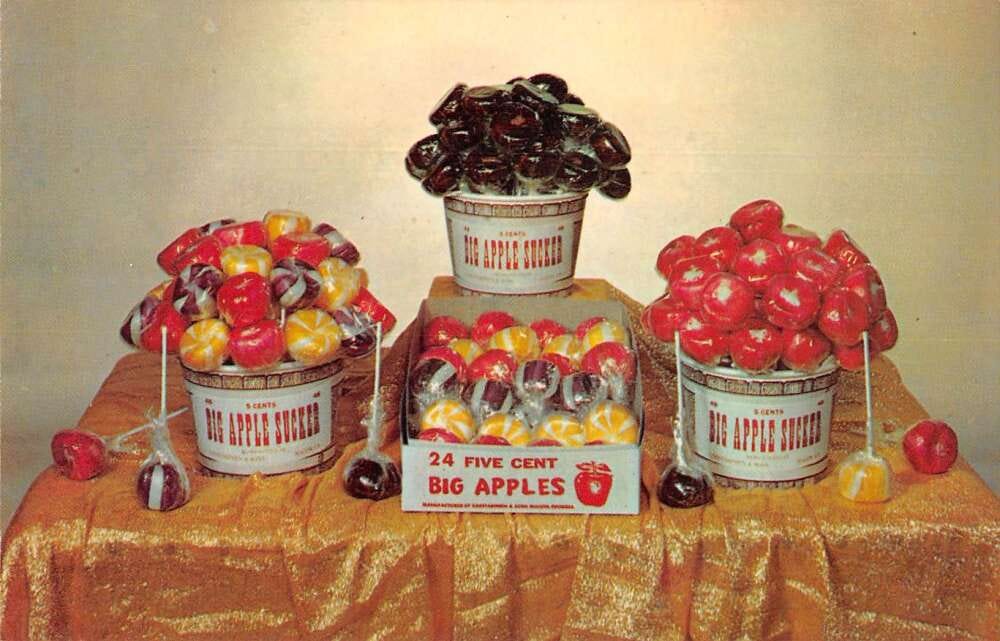
Once – literally one time in my life – I made candy apples. I risked burning off my fingertips with molten sugar to create these gorgeous treats. I arranged them pleasingly on a spooky plate and sat them out in my office.
Not one of them got eaten.
And honestly, who can blame ‘em? Eating a candy apple is an undertaking.
You unhinge your jaw to take a bite. When the hard crack sugar finally shatters beneath your teeth, it sends razor-sharp shards of sticky sugar flying everywhere (always down your cleavage). While one might add cinnamon candy flavoring, it’s really just sugar and food coloring you’re left crunching.
And inside? It’s just a regular-ass apple! All that work for fruit? Thankyouno.
How did they become such a ubiquitous snack of the fall if we all agree that they’re just a listeria outbreak waiting to happen?
Pretty much as soon as we figured out how to cook with sugar, we started coating fruit with them (way to gild the lily, ancestors). Sometimes, this was just for snack time. But it also helped preserve fruit in some cases. Given that apples are harvested en masse in late September, it makes sense that we’d try to invent new ways to preserve them to last through the fall.
But that’s not really the story of the candy apple.
Legend has it that a Newark-based candymaker was the originator of the candy apple as we know it today. He was actually experimenting with a red cinnamon candy for the Christmas season in 1908 when he decided to dip some apples and set them in his store’s window. He began selling them and the treats caught on as a Jersey Shore staple.
The Brits, however, had been making toffee apples for some time. Toffee apples – as best as I can tell – differ in that they don’t traditionally have the red food coloring or candy flavorings added (don’t come for me; I said traditionally!)
In the US at least, candy apples have maintained that boardwalk feel. You see them in those faux-vintage candy “shoppe” storefronts located around tourist sites. You also see candy apples sold at the grocery store in a cardboard display that’s meant to simultaneously call to mind both a carnival and a very earnest, homespun farmstand – they’re sold right alongside a much larger stock of caramel apples. Candy apples are clearly a novelty, and perhaps more decorative than anything. The cheerful red gives you the illusion of the apple of your dreams, impossibly ripe and sweet.
If you wish to torture yourself or someone you love, there are tons of recipes online. My advice from personal experience: make sure you completely remove the wax from around the apple and that the apple is completely dry before you dunk it. Why, you ask? The melting wax or water will create a bubble of steam on the surface of the apple that might pop at any moment, sending a splatter of sugar hotter than the surface of the sun to sear your delicate flesh.
I’d also add that red food coloring and cinnamon candy flavoring is just a suggestion. I think you could probably do some experimenting to create some unexpected tricks with this tooth-cracking treat!
Caramel apples? Yes. A thousand times yes.
Candy apples? Absolutely not, for all the reasons you listed above and then some.
While we're at it, let's get rid of creme brulee. Shards of broken glass on top of my creamy custard? No thank you. Gimme a nice flan instead.