

Affy Tapple
Yes, that is correct.

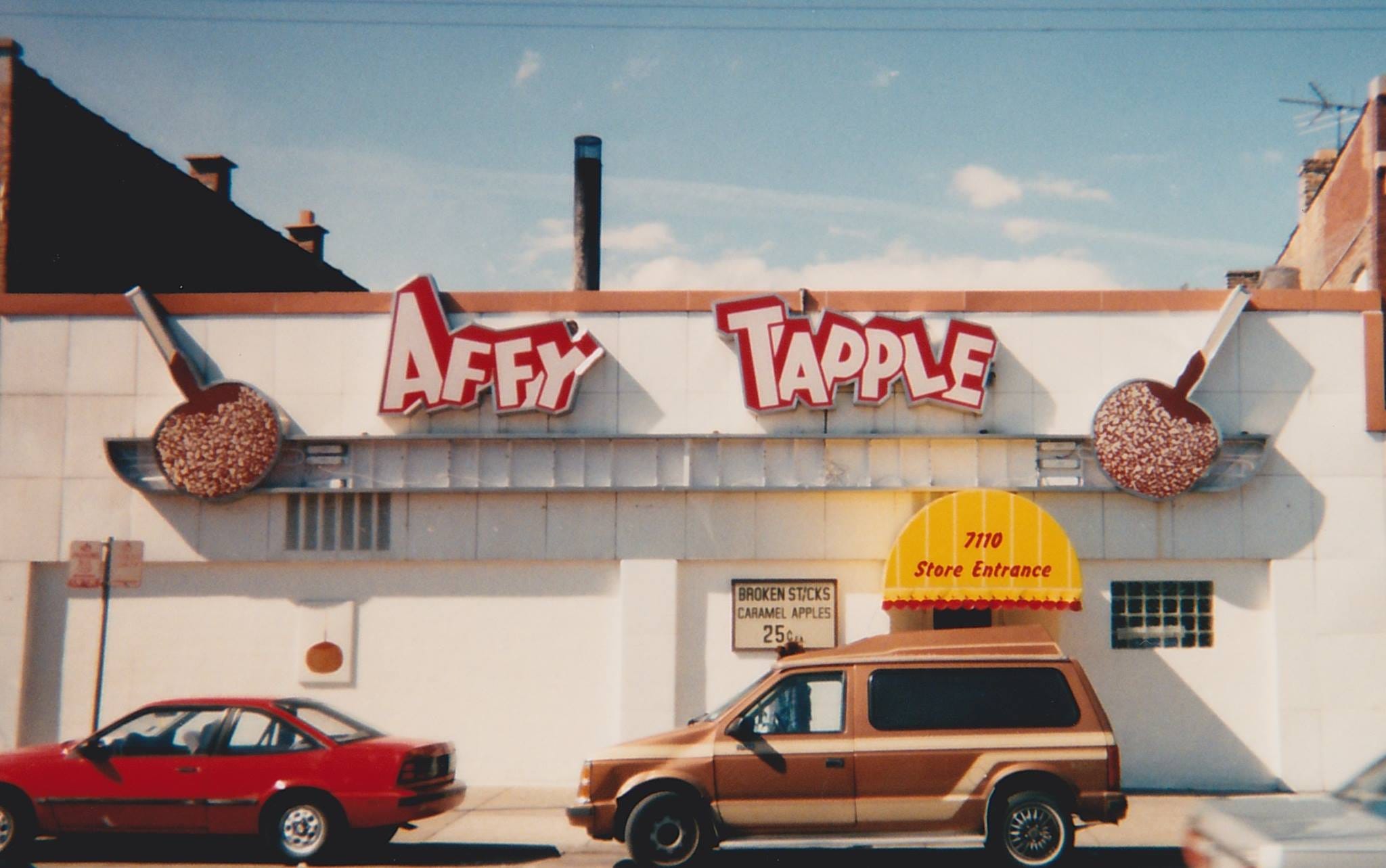
Chicago has given us so much. Deep-dish pizza. Brownies. The ferris wheel. Carmy Berzatto. Da pope. The Wienermobile. And, of course, the Affy Tapple.
The caramel recipe and (supposedly) the first caramel apple made in the United States was developed in 1948 by Mrs. Edna Kastrup. Within four years, the Kastrups had a storefront for their sticky creation. The lore holds that they went with the name Affy Tapple for their taffy apple because it would put them first in the phonebook, ahead of other confectioners.
Dan Walker of Kraft Foods is also rumored to have invented caramel apples in the 1950s as a way to use up Kraft caramels; and, indeed, their product is how most folks make their own to this day. However, both the Kastrups and Kraft were behind Hunter’s Candy of Moscow, Idaho, which began selling caramel apples in 1936.
For the uninitiated, the basic Affy Tapple is a plain apple (according to the website, they use a mixture of Empire, Jonathon, Granny Smith, Gala, Red Delicious, and Golden Delicious) skewered with a stick, then dipped in a thick caramel and sprinkled with chopped peanuts. (Here’s a great video of the process.) There are variations: with chocolate, without nuts, with festive sprinkles, and even a sour option.
Apples have long been associated with the autumn celebrations. They’re harvested mid-August through early October. Fresh apples generally last a month or two with proper storage, so they’re an ideal Halloween treat. We’ve discussed bobbing for and cutting apples on Snap-Apple Night as a form of Halloween divination, so we know they’re a traditional spooky snack.
We’ve also discussed how we humans like to gild the lily a bit with candy. Taffy apples did come after toffee apples, or candy apples as we know them; candy apples were first sold in London in the 1890s. But caramel apples were embraced by the post-war boom of the 1950s and 1960s, a time in which many of our Halloween party traditions really cemented themselves.
So anyway, time for me to buzzkill. Let’s talk about the bacteria in the room, shall we? Listeria monocytogenes is commonly found in soil, stream water, and sewage, which means it’s found in plants and food. Generally, safe food handling – including washing produce properly – means that an average person never has any trouble out of listeria. However, there are certain conditions that can cause this bacterium to multiply. When the stick pierces the apple, it introduces a little bit of the outside to the inside of the apple; the caramel then seals the spot, creating a moist environment where any remaining listeria bacteria can thrive.
Brands like Affy Tapple adhere to strict sanitization and washing procedures to avoid listeria outbreaks. After a rash of them a couple decades ago, many caramel apple (and candy apple) brands began selling their apples without the skewer inserted. While this may seem like a smart safety precaution, it also benefits them; the apples are a lot easier to ship without the stick.
That said, listeria outbreaks with caramel apples are few and far between, in part because of safe handling know-how. Listeria thrives most in room temperature situations. Refrigerating a caramel apple is the best way to prevent listeria growth. Do consume quickly, usually within a couple days of purchase. Caramel (and candy) apples without sticks inserted aren’t guaranteed to be listeria-free – any puncture on the skin could introduce listeria bacteria into the apple – but it is much less likely.
So as we bridge the season from harvest fun to Halloween, let’s raise a caramel-drizzled stick in salute to Idaho–errr… Chicago.